
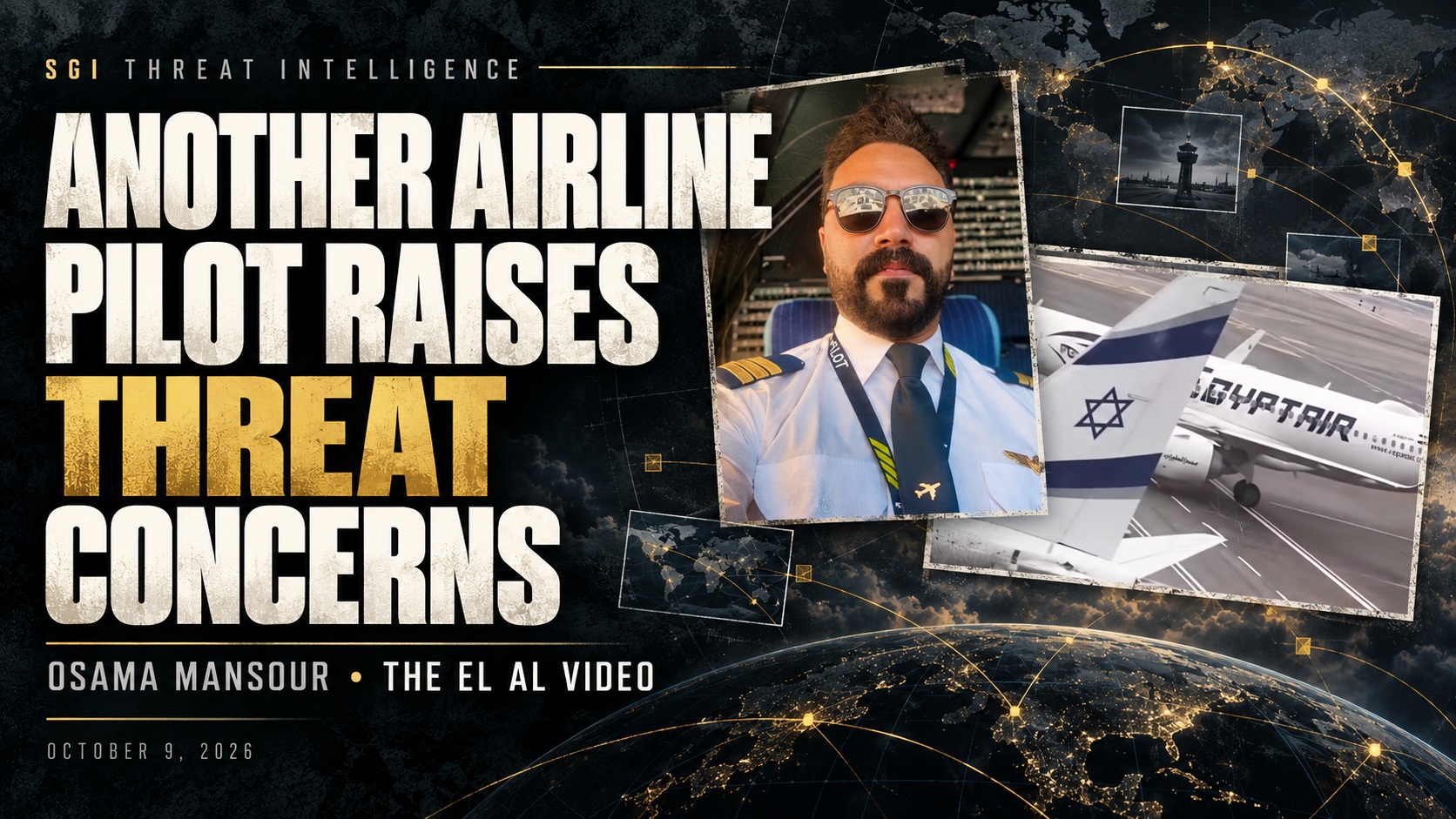
FZ1073 diverts after a cockpit attack. Insider risk becomes the immediate aviation-security context.
Key judgments
An airline-specific message warrants an insider-risk review
Osama Mansour’s aircraft clip places El Al beside EgyptAir and overlays retaliatory speech. His public accounts present an aviation identity to a substantial audience. The immediate security question is whether this is provocative performance or a warning from someone with current cockpit access.
A specific airline, ambiguous intent
The aircraft and soundtrack are observable. Together they raise a credible concern, but the retained post contains no explicit attack plan. Mansour reportedly describes it as pride in EgyptAir.
A connected public footprint
Instagram directly links his Facebook profile, where the same aircraft video appears. The Instagram profile displayed 20.1K followers on October 8; Facebook displayed 7.2K. Repeated military imagery and captioned encounters deepen the public record.
Access is the decisive gap
Historical occupational records align with the public EgyptAir imagery and pilot identity. Verified current duties and behavioral evidence would determine how urgently to escalate the case.
SGI assessment: Refer the message for professional aviation-security review and verify current access. The consequence of misuse of cockpit access is high; the probability of an attack cannot be determined from this record.
Full analysis and evidence
01 · Message analysis
The imagery supplies the airline. The audio supplies retaliation.
The recording shows an El Al tail beside an EgyptAir aircraft on an airport apron. Its Arabic overlay refers to a surprise entrance changing events. The soundtrack states: “I still say: an eye for an eye. A tooth for a tooth. Violence for violence.”
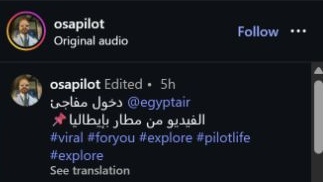
Three elements create the signal
The identifiable airline narrows the visual reference. The surprise-arrival wording adds a disruptive frame. The retaliatory soundtrack makes that combination more consequential than a routine apron photograph.
El Al is visually salient, but the post does not name an intended victim, describe an act, specify a time or announce preparation. The footage shows proximity between aircraft, not evidence that Mansour could access the El Al aircraft.
Two explanations to test
Intimidation: the airline imagery and retaliation were deliberately paired to convey hostility. Nationalist performance: the clip celebrates EgyptAir and Egypt’s military history through provocative language. Mansour reportedly offered the latter explanation to Italian media and denied a link to the flydubai attack.
The relevant test is the complete post and surrounding behavior: direct targeting, escalation, explanations made before the controversy, or evidence of preparation. Another patriotic image would add little to that test.
Publication timing is clearer than filming timing
October 8 coverage describes an October 7 upload and identifies Milan Malpensa through Italian reporting. The original caption identifies Italy and shows an edit. The filming date and airport have not been independently established in this review. That distinction prevents an old recording from being mistaken for fresh reconnaissance.
02 · Attribution
A direct profile link anchors the public footprint
The strongest account pivot is visible in the Instagram biography: @osapilot links directly to facebook.com/osa.mo1. That relationship is more useful than a username resemblance because it is an affirmative connection published by the account itself. The linked Facebook profile uses the name Osama Mansour and aviation branding. The case also retains the aircraft video from that feed.
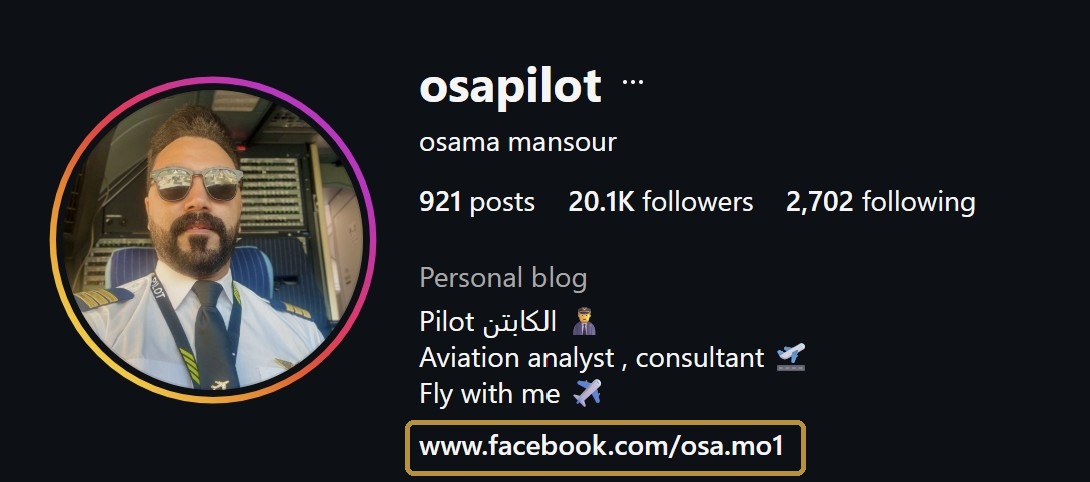
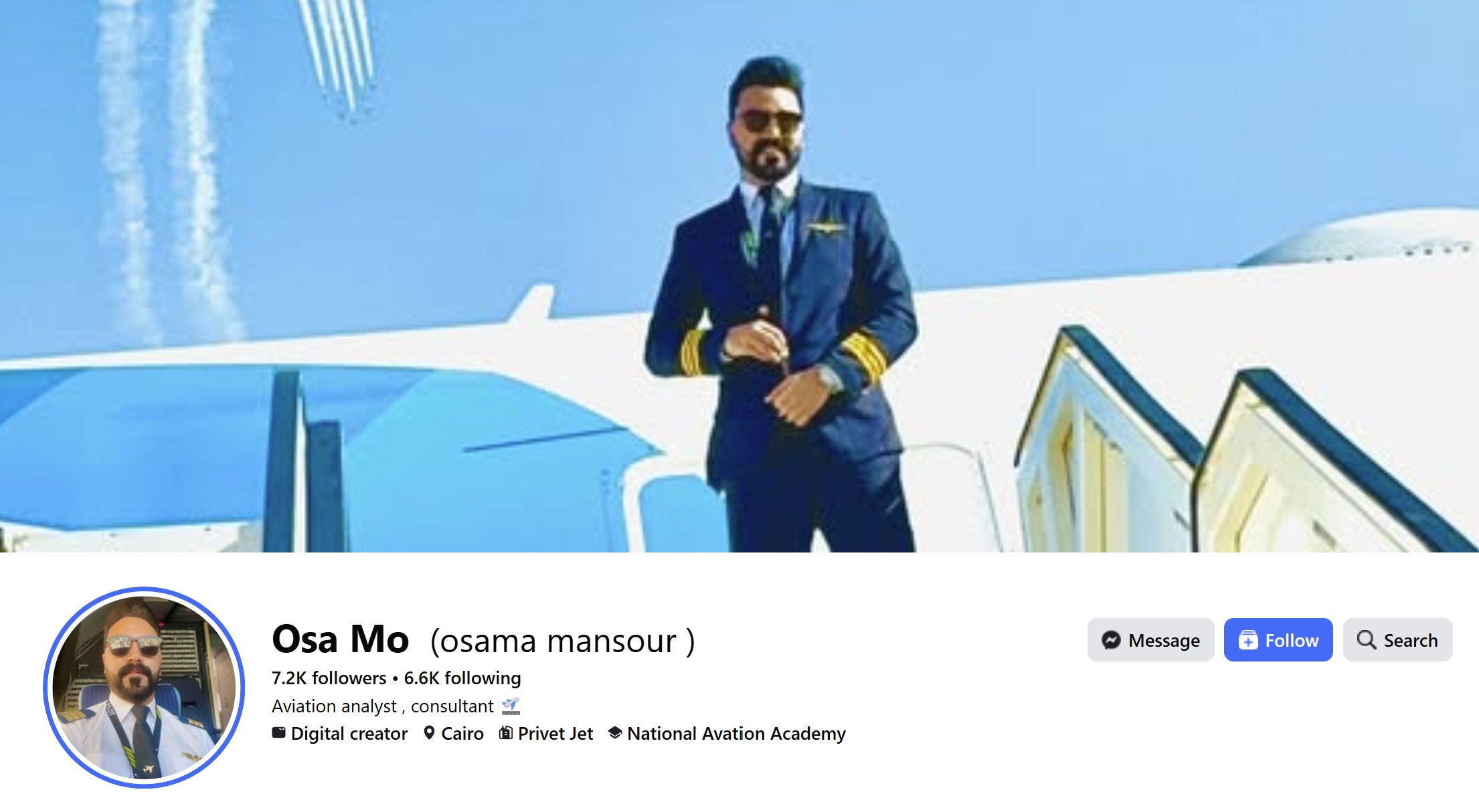
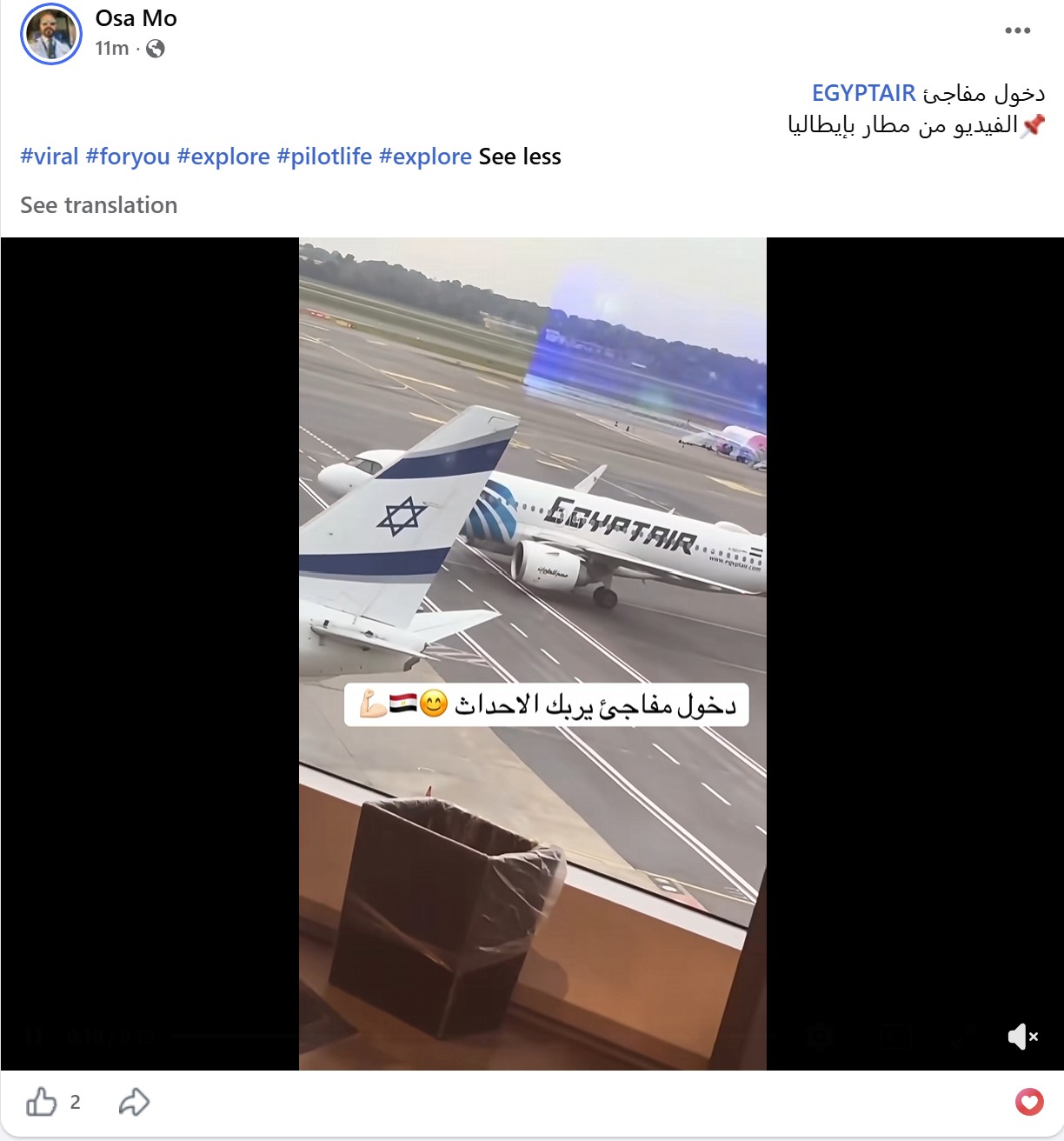
Instagram @osapilotDirect bio linkFacebook osa.mo1Matching videoAircraft post
Distribution finding: Facebook displayed 7.2K followers alongside Instagram’s 20.1K. These are separate platform counters, not an audience total: the same people can follow both. The account presents itself as a creator as well as a pilot, making provocative engagement-seeking a relevant explanation to test alongside intimidation.
The public footprint also includes Snapchat @osa92pilot, using the name “osa pilot” and publishing aviation content consistent with the other accounts.
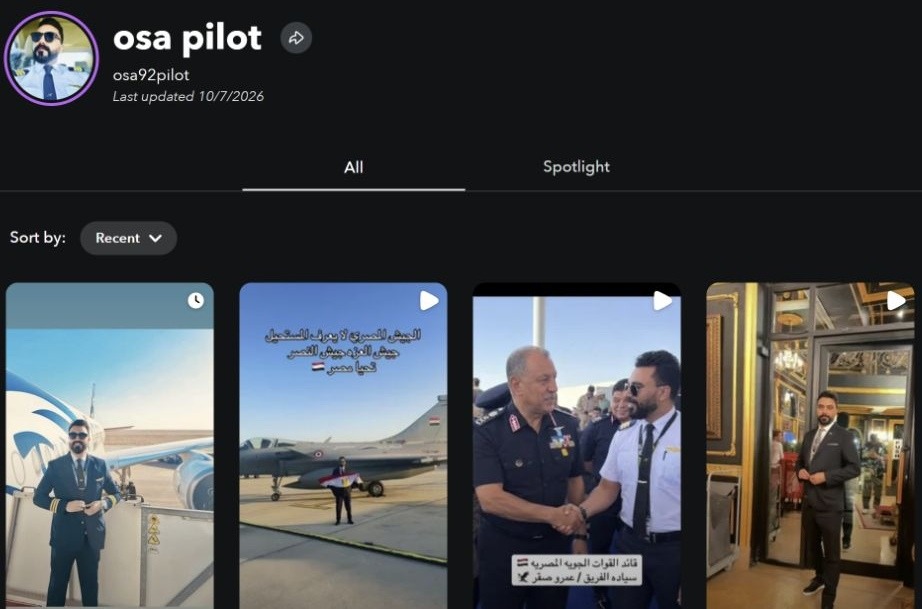
The useful match is content, not just a handle. Snapchat repeats the flag-and-fighter scene also found in the supplied Instagram material and uses the same aviation presentation. That gives the account link a concrete visual basis beyond the similar username. The officer encounter below is an additional contextual lead from this grid.
Occupational identity and access
Mansour’s pilot identity and EgyptAir association are corroborated across profile descriptions, airline-branded photographs and collected historical occupational records. Facebook also lists private-jet work. The record supports the professional association more strongly than a uniform photograph alone. Current flight duties, licensing and aircraft access still require contemporary authoritative information.
Attribution insight: the direct Instagram-to-Facebook link and repeated video establish continuity of the public presentation. Cross-posting expands distribution, but it supplies one originating message rather than independent corroboration of its meaning.
The occupational record
The aviation identity extends beyond a single uniform selfie
The retained album material spans a younger-looking uniform portrait, another uniform photograph, an EgyptAir-branded display and a business-jet setting. Read together with the profile names, direct account link and repeated aircraft video, these provide a richer basis for the subject’s public aviation identity than one contemporary profile photograph.

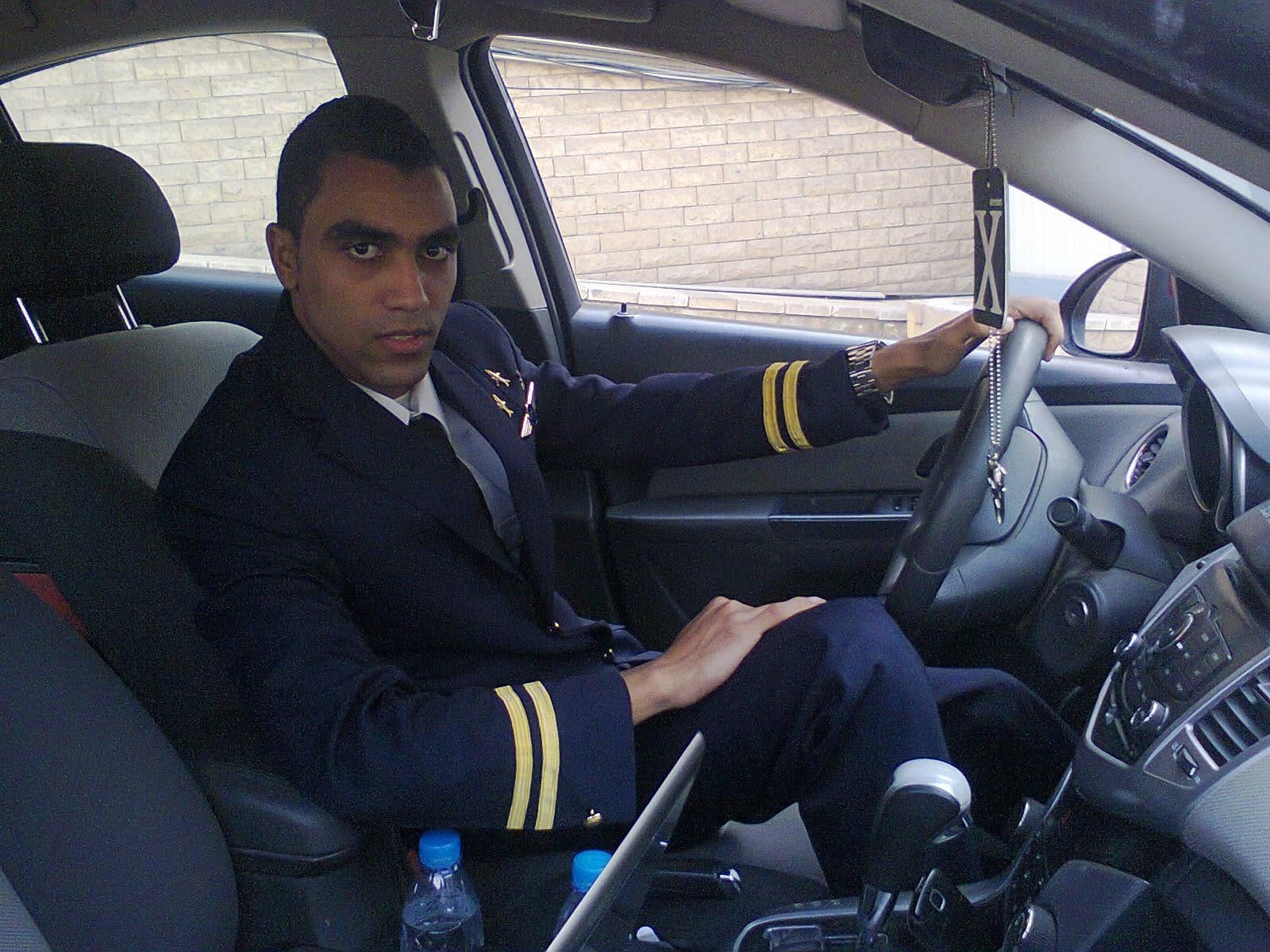
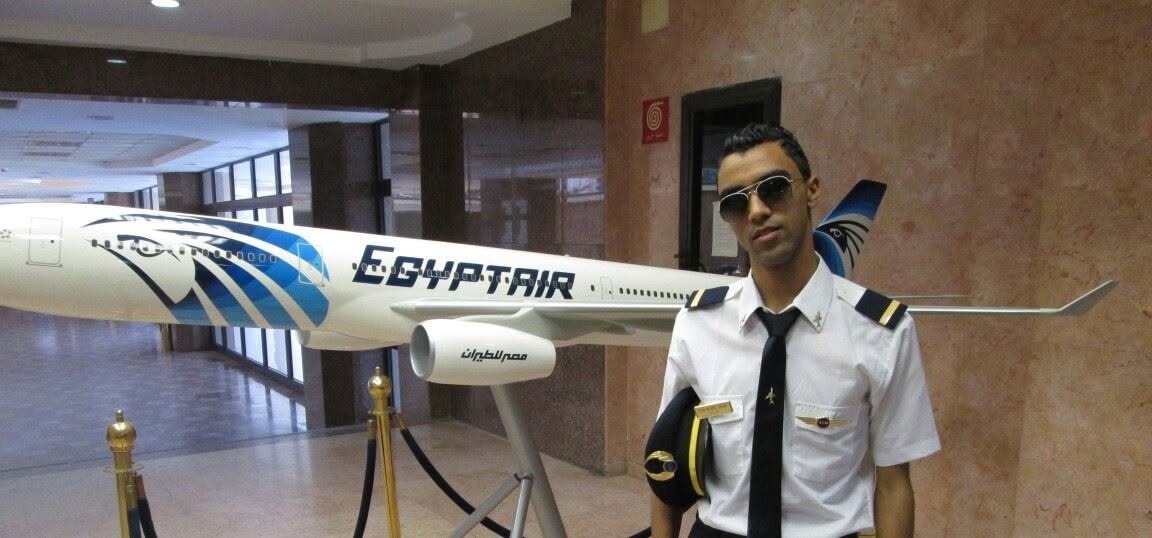
The EgyptAir association has a visual anchor
The airline name and livery appear beside him in uniform. This gives the professional association a visual anchor that aligns with the occupational records below. It establishes a more specific context for the disputed clip than an aviation-themed biography alone.
The occupational records align with the public presentation
The collected material includes a historical record listing EgyptAir as employer and pilot as occupation. A second record contains those same professional fields alongside the Facebook profile address facebook.com/osa.mo1, the destination directly linked from @osapilot.
| Dimension | Evidence in this record | Analytical implication |
|---|---|---|
| Instagram → Facebook | The biography links directly to osa.mo1. | An explicit public account connection. |
| Facebook → professional record | The collected record includes the same profile address, employer EgyptAir and occupation pilot. | The occupational claim is tied to the linked profile, rather than inferred from a similar name. |
| Professional record → photographs | EgyptAir branding and pilot uniforms appear in the retained album material. | Different evidence types converge on the same professional association. |
Assessment: the EgyptAir affiliation is a corroborated historical association, not merely a visual guess. The older dataset’s date is a historical reference point, not a verified start date or proof of current employment. The two records may share underlying information; they should not be counted as two independent employer confirmations.

Commercial and private aviation appear in the same footprint
The business-jet photograph is consistent with the private-jet work listed on Facebook. The relevant implication is that his public aviation identity is broader than one airline. Aircraft ownership, authorization to operate it and present access cannot be read from a posed photograph.
Chronology: these photographs suggest different stages of the public presentation. The original posting and filming dates are not established for every image, so this is a visual record, not a verified career timeline. Appearance comparison supports consistency with the album attribution; it is not a biometric identity test.
03 · Public presentation
Aviation identity and military pride are recurring themes
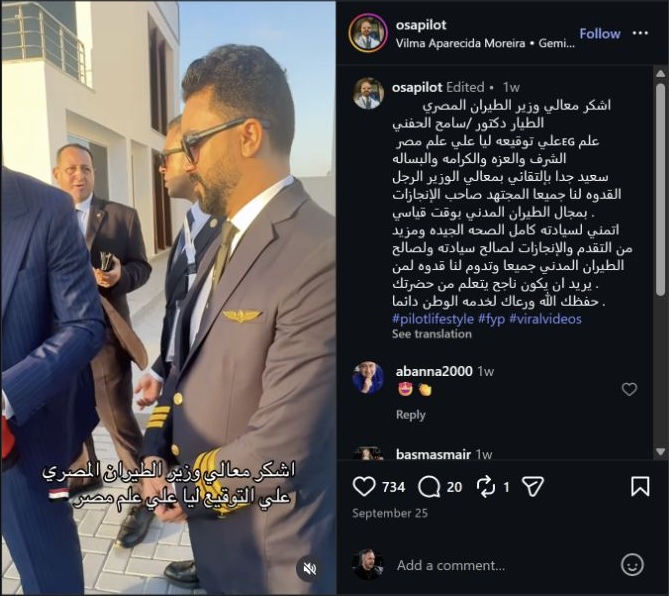
The feed includes a pose beside a fighter aircraft with an Egyptian flag, October 6 commemorations, a military-training claim and a reported encounter with Egypt’s aviation minister. The pattern matters because the aircraft clip sits within an established aviation-and-military persona, rather than an otherwise unrelated feed. The repeated use of uniforms, aircraft and institutional encounters strengthens the account’s professional presentation to viewers.
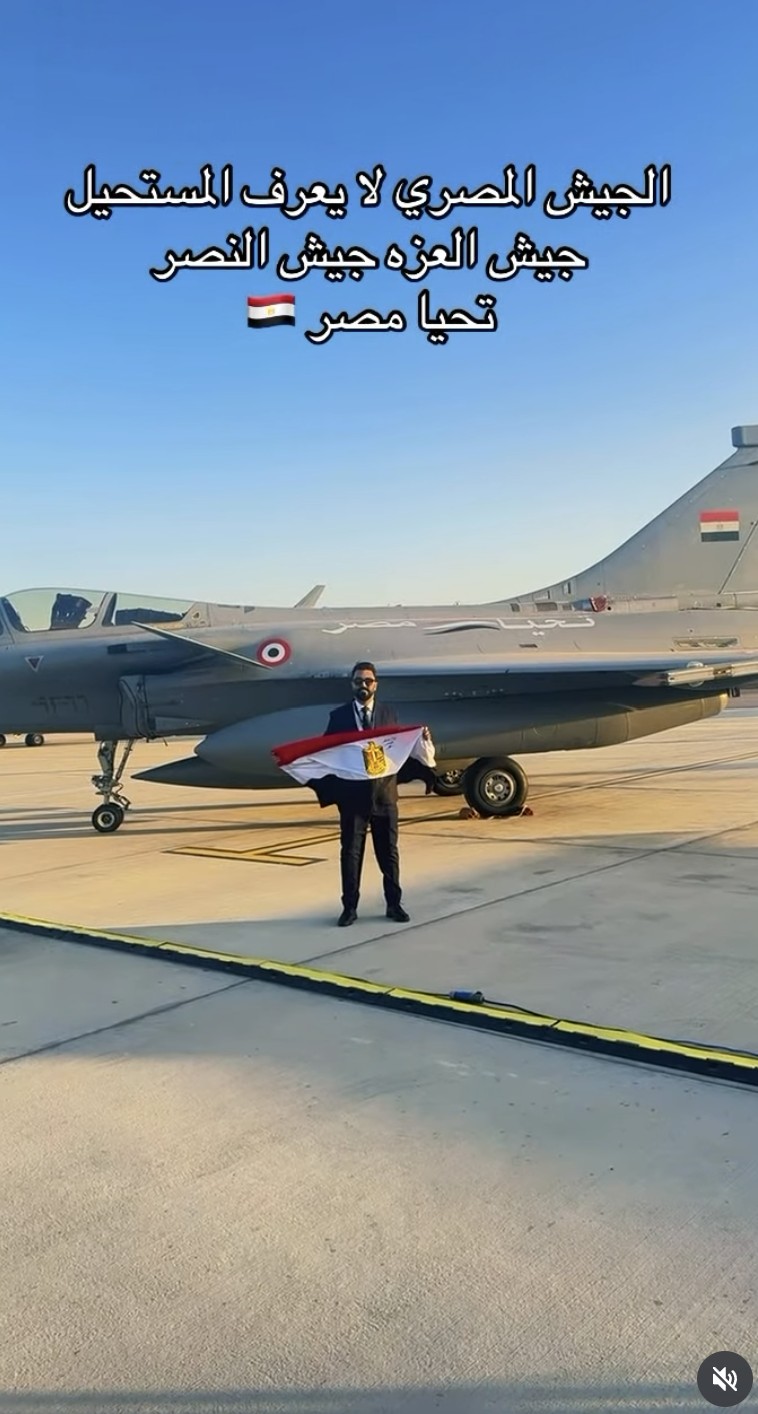
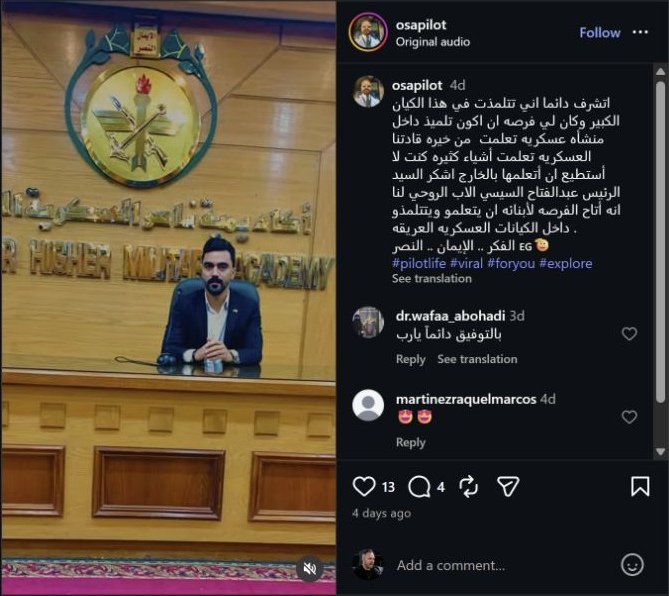
A September 25 caption thanks aviation minister Sameh El-Hefny for signing a flag. The training caption says he studied inside a military institution and learned from military leaders. Both are useful evidence of the persona he presents; neither establishes current military service or institutional backing. The analytic value is context: the disputed clip draws on themes already present in the feed.
The Air Force commander encounter: a specific public claim
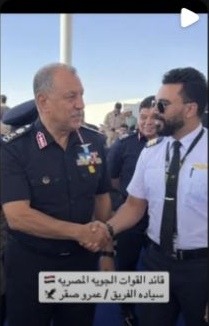
A named encounter, rather than a vague connection claim
The retained tile shows a handshake and supplies a name and office. An Egyptian Defense Ministry announcement identifies Lieutenant General Amr Saqr as Air Force commander, consistent with the caption’s title. The photograph’s date, setting and the depth of the relationship remain unresolved. Official role reference.
Interpretation: the Air Force and aviation-minister encounters show how the feed presents proximity to senior institutions. They justify documenting those contacts as part of the public footprint. A handshake or signed flag does not demonstrate access to military capabilities, patronage or an operational network.
The academy name makes the training claim testable
The sign behind Mansour reads Nasser Higher Military Academy. His Arabic caption describes pride in studying inside a military institution, learning from leaders and thanking President Sisi for the opportunity. That makes the post more specific than a generic claim of military training: it supplies an institution whose course and attendance details could be checked.
The academy’s official material documents courses for civilians, including journalists. An academy-related photograph therefore cannot, on its own, establish that the person is a serving military officer or completed combat training. The course name, attendance period and credential are the facts needed to resolve the claim. Defense Ministry account of a civilian journalists’ course.
Context in sequence
Three cases converged in one week
Libby Alon renews scrutiny of the United pilot case and reports further employment action.
Mansour’s aircraft post attracts scrutiny. October 8 coverage also reports his denial of any flydubai connection.
Aviation outlets reproduce United’s statement that Mossallam is withheld from service pending review.
Finding: The cases share a security context, not a demonstrated operational connection. Sequence explains heightened concern without proving coordination.
The digital footprint, explained
Each connection answers a different question
Open-source intelligence (OSINT) connects public clues into an evidence trail. Here, a direct profile link anchors the account relationship; matching content strengthens continuity; photographs and captions establish the public professional presentation. These connections should be shown with their evidence basis, rather than treated as equally strong.
OSAMA MANSOURPublic aviation identity · @osapilot
Direct biography link to osa.mo1
Explicit account connectionSame aircraft scene and Italy caption
Content continuityosa92pilot · flag-and-fighter scene
Cross-platform content matchEgyptAir occupational fields · academy · named encounters
Historical corroboration and public contextWhy the distinction matters: the account trail can be strong while the inference about intent remains unresolved. More matching profiles increase confidence in who presented the material; they do not automatically increase the likelihood of an attack.
04 · Threat indicators
Separate the message, the capability and the intent
| Dimension | Evidence in this record | Analytical implication |
|---|---|---|
| Target reference | El Al is identifiable in the footage. | A specific airline is visually salient; this is not an explicit target declaration. |
| Threatening language | Retaliatory speech is placed over the aircraft video. | Reasonable basis for concern and contextual review. |
| Capability and access | Pilot identity, EgyptAir imagery and corroborating historical occupational fields. | Verify current duties and access; social imagery cannot substitute for personnel records. |
| Intent and preparation | No explicit operational plan, attack instructions or preparatory conduct established. | Do not label an attack imminent from this post alone. |
| Alternative explanation | Reported denial and claim of airline pride. | Test this explanation against the complete original content and relevant surrounding posts. |
Assessment: Prioritize professional review of the post and verification of cockpit access. The combination supports referral; it does not support an imminent-attack finding. The missing link is behavioral evidence of intent or preparation, not another follower count or uniform photograph.
Would raise concern: a direct threat, aircraft or route-specific preparation, credible corroboration, or verified access coupled with escalating conduct.
Would reduce concern: a complete recording supporting the nonthreatening explanation, verified earlier context, or authoritative information resolving the access question.
05 · Why the context matters
FZ1073 raises the consequence of getting cockpit risk wrong
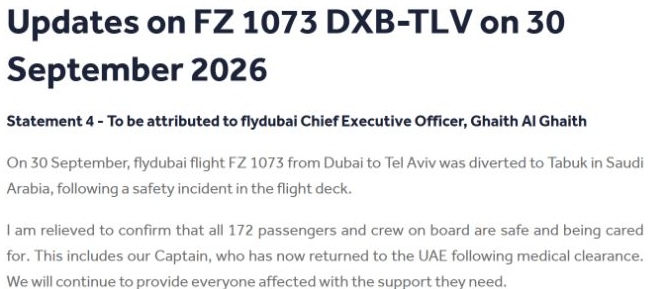
Flydubai confirms that FZ1073 diverted to Tabuk on September 30 after a flight-deck incident. Subsequent reporting attributes to UAE prosecutors an attack on the captain with a crash axe and an attempt to seize aircraft control. Hamam al-Hammami was identified in reporting as the suspected attacker. The insider-access dimension is the relevant comparison.
This changes the salience of insider-risk questions around cockpit access. It does not connect Mansour to the attack. The appropriate lesson is to evaluate credible conduct signals promptly, preserve evidence and verify access, rather than treating every provocative post as proof of the same mechanism.
The United pilot case: reporting and airline response
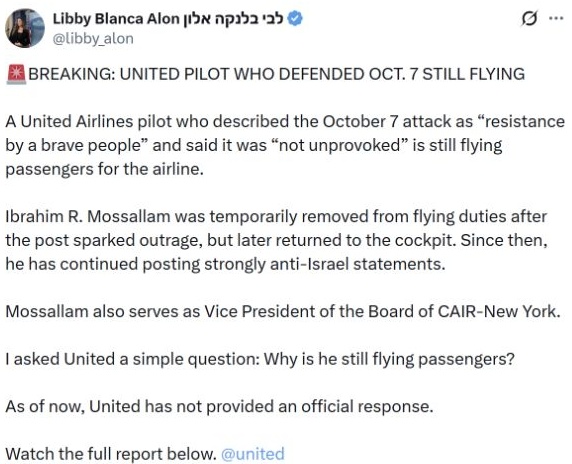
Libby Blanca Alon’s October 5 reporting renewed attention to Ibrahim Mossallam’s comments about the October 7, 2023 attack and his return to flying after an earlier removal. Her subsequent posts described another suspension and disputed changes in scheduling. These are separate allegations about a different individual.
What changed
The airline response is stronger evidence than a disputed schedule claim
Alon’s first report supplies the underlying conduct allegation and prior employment context. Later reporting supplies an attributable United response. Those answer different questions and should be read in sequence.
The strongest current status statement in the reviewed reporting is United’s response, reproduced by aviation outlets on October 8: “We have withheld this pilot from service pending an ongoing review.” That is the latest attributable airline position in the reviewed record. The case illustrates a practical distinction: a conduct allegation can trigger an employment review without establishing an attack plan. No operational connection among these cases has been identified.
06 · Decision support
What a proportionate security review should resolve
- Authenticate the content. Confirm the original upload, full audio, edits, recording context and any direct explanation by the account holder.
- Verify occupational access. Resolve the current employer, pilot status, duty assignment and relevant access through authorized channels.
- Assess the behavior in context. Look for explicit threats, preparation, escalation and credible corroboration. A single post should not be made to carry evidence it does not contain.
- Separate referral from a finding. A reason to review is not proof of an attack plan. Document the evidence that changes the assessment in either direction.
07 · Evidence and reading limits
The evidence behind this assessment
The article draws on retained public-profile screenshots, the supplied original video, collected historical occupational records, public posts and reporting reviewed through October 9, 2026. Screenshots establish what the retained interface displayed; they do not independently authenticate every biographical claim. This is a focused threat assessment, not a complete account history, audience census or employer investigation.
- Original aircraft Reel and Instagram profile.
- Linked Facebook profile and Snapchat profile.
- October 8 coverage, including Mansour’s reported explanation and Italian airport identification.
- Flydubai’s official FZ1073 statements; AP reporting on the alleged attack and suspect.
- Alon’s October 5 report; reported renewed suspension.
- AeroTime’s October 8 report of United’s response; AirlineRatings’ direct request to United and distinction between claims and confirmation.
Original captures and integrity records are retained internally. Public figures are cropped derivatives; the sources above provide the surrounding public context. Assessment cutoff: October 9, 2026.
Digital evidence should sharpen a security decision
The strongest finding is the deliberate juxtaposition of an Israeli airline and retaliatory language within a pilot’s aviation persona. The strongest attribution is the direct public account link; historical occupational fields and airline-branded photographs corroborate the EgyptAir association. The most consequential unresolved fact is current access. Resolving that fact, together with behavioral evidence, would turn an online controversy into a better-informed security decision.
For documented digital investigations and case support, discuss your matter with ShadowGraph Intelligence. Follow Travis Hawley on X and Instagram.